Configurator product architecture for complex multi-variant catalogues
A Shopify merchant selling configurable products with many dependent option combinations found the platform's built-in variant system insufficient. Customers were encountering invalid configurations on the storefront, and pricing and availability information was inaccurate at the point of selection — creating confusion, support volume, and abandoned add-to-cart attempts.
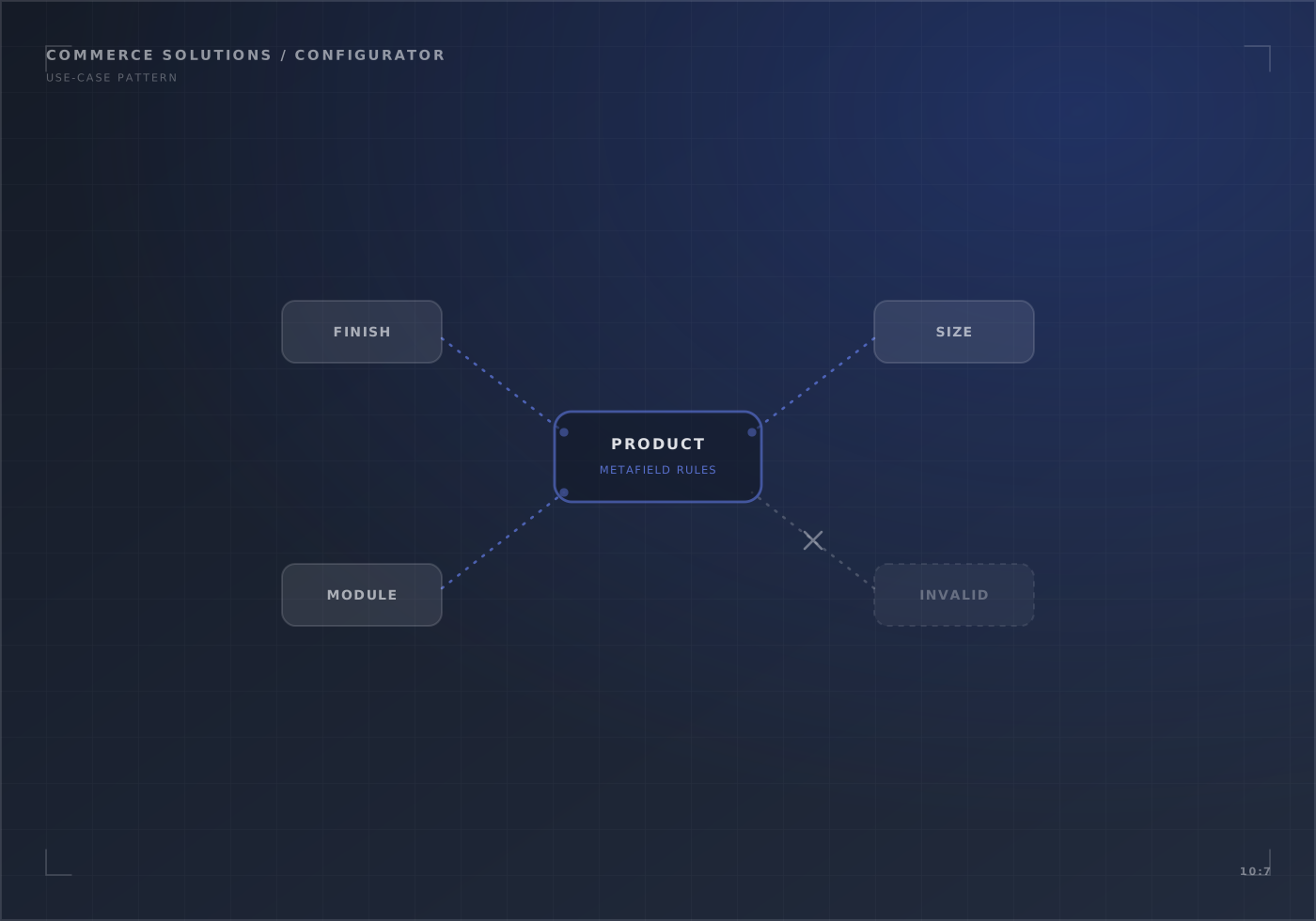
Pattern
Configuration-driven product modelling: option rules and availability logic encoded outside the Shopify variant system, evaluated server-side, and surfaced via a purpose-built selector component. The storefront reflects the real state of a product at every selection step rather than approximating it.
Applicability
Shopify merchants where:
- Products have dependent option combinations that exceed Shopify’s native 100-variant limit, or where many combinations are invalid
- Customers are reaching the cart or contacting support with impossible configurations
- Pricing varies by configuration in ways that are difficult to model as static variants
- Availability must be checked per-configuration rather than per-product
Evidence basis
Pattern derived from Shopify configurator architecture engagements. Evidence strength: observed (elimination of invalid configuration errors; accurate pricing and availability at point of selection).
Caveats
The complexity of the server-side rules engine scales with the number of option dimensions and dependency rules. Simpler catalogues may not justify the investment; the pattern is most valuable where the variant system is a genuine constraint.
Configuration-driven product modelling using Shopify metafields and a custom selector component. Availability and pricing rules encoded server-side; the storefront queries them dynamically to prevent invalid option combinations and surface accurate information at every selection step.
Invalid configuration errors on the storefront were eliminated. Customers received accurate pricing and availability at every selection step, reducing support queries related to configuration confusion.
Recognise this pattern in your store?
A free triage call is the fastest way to find out whether this pattern applies to your situation — and what the right next step would be.